

I've been on both sides of the IEP table.

I taught special education for eight years. Then I became the mother of a Level 3 autistic child, and suddenly I was the parent on the other side of meetings I used to run.

Merrie Weekley
Merrie walking on a school campus with her students

The teacher years.

Eight years of public-school ESE. Preschool, elementary, middle school. Hundreds of IEP meetings where a parent walked in nervous, signed a document they hadn't fully read, and walked out hoping for the best. I sat on the school's side of that table. I saw what got written when nobody pushed back. I also saw what got written when somebody did.

I learned where the legal floors are versus what schools voluntarily provide. I learned which language commits a school to actually delivering services and which language gives them an exit. I learned how the same evaluation can produce very different IEPs depending on who is in the room and what they ask for.

Most of all, I learned that parents who came in informed got dramatically better IEPs for their children. Not because anyone on the school team was acting in bad faith. School teams are stretched, and the easy path is always to write the document that's least likely to generate pushback. An informed parent makes that path harder, and the IEP gets better as a result.
I had eight years of inside knowledge and I still felt behind. Most parents have none of that and feel twice as behind.

Then I became Jacob's mom.

I adopted Jacob out of foster care. A nonverbal Level 3 autistic boy whose previous placement hadn't worked. He's a happy, thriving ten-year-old now. But the path here ran straight through every system I'd been working inside as a teacher. Suddenly I was the parent in the meeting.

I noticed things other parents wouldn't catch. The soft language in the proposed IEP. The services missing from the draft. Goals that would never produce measurable progress. Accommodations from a previous IEP that had quietly disappeared. Schools responded to my signature very differently after they realized I'd taught in the building next door three years earlier.

And I felt the loneliness most parents describe, even with my background. The phone calls without a return. The decisions about services I'd never had to make as a teacher. The exhaustion of being the parent and the case manager and the therapy coordinator and the homework helper.

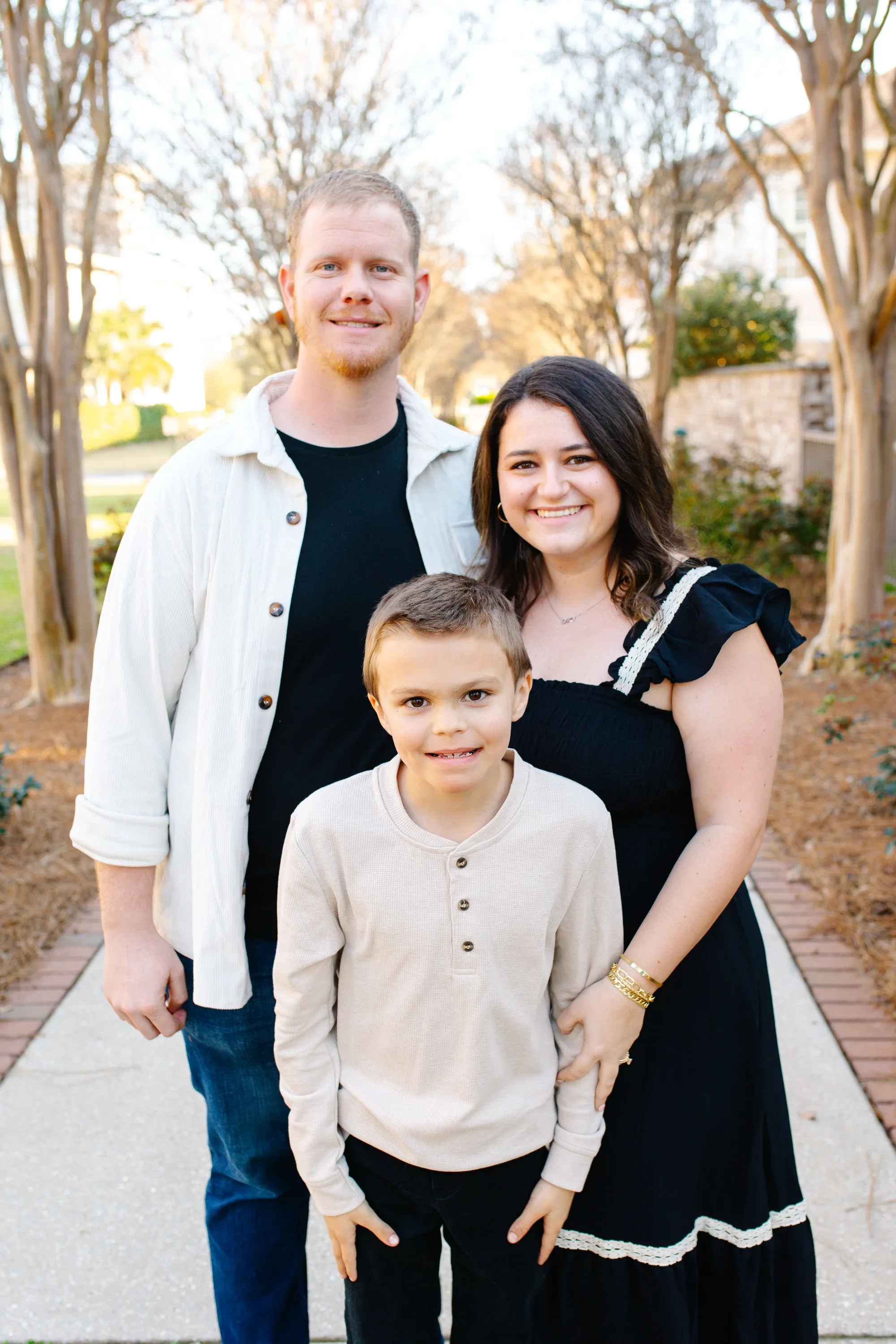
Merrie, her husband, and her son Jacob

Why I built the Red Flag Audit.

I started doing IEP reviews informally. For friends, for friends-of-friends, for parents in our Pensacola community whose children had just been diagnosed. The same patterns came up over and over. The same vague goals. The same missing services. The same "will be considered" instead of "will be provided."

The Red Flag Audit is the document I wish someone had handed me on Jacob's first IEP. I built it for the parents who came after me, because the difference between an informed parent and an uninformed parent in an IEP meeting is enormous, and the gap is closeable with one document and one conversation.

What I'm building now.

Parenting the Spectrum is three things: IEP advocacy, a growing tutoring team trained on the same techniques your ABA team already uses, and the Coaching Session for everyone whose questions don't fit cleanly into either bucket. Newly diagnosed. Trying to decide which therapy. Asking the hard daily-life questions nobody else will answer honestly.

Every offer I build comes from the same source: this is the help I wish I'd had, delivered by someone who has actually been on both sides of the table.

Get the IEP Prep Checklist.

The 12-question checklist Merrie hands every parent before their first IEP meeting. Free.

We'll email the checklist instantly. No spam, ever.